Digital Sovereignty & IT Security
Your data
Your systems
Your rules
We plan IT landscapes that belong to your organisation and guide the way there: open standards, operated in your own house, hardened. Two questions, one answer: who owns your data, and who can reach it.
Our focus: cooperatives, public-benefit organisations, small and medium-sized businesses and public administration in the Berlin-Brandenburg region.
Years of systems engineering
Independent, open source, transparent
Advice in German and English
- Cloud and AI applications
- Document and knowledge management
- Backups with versioning
- Audits and logging
The entire solution stays in your own environment.
For twenty years we wrote bids against public tender specifications, eight of them for federal project agencies, federally owned companies and chambers of commerce. Today we advise the buying side before a contract is awarded: what the actual requirement is, what it will cost to leave a system later, and whether an offer on the table holds up to technical scrutiny.
Services
Four routes back to control
From assessment to running system: vendor-neutral, on open standards, operated in your own house.
Sovereignty check
We establish where your data actually sits, who has lawful access to it, and which dependencies would leave you unable to act in a crisis. The result is a prioritised order: what to change first, what later, and what to leave alone.
Out of someone else’s cloud
A staged move back to open source and systems you control: recover your data, cut licence costs, secure your ability to operate, with no big bang and no interruption to daily business.
AI in a cage
Language models and assistants working on your own documents, run locally, so your knowledge never lands with an outside provider. Here AI is a tool, not the point: it should use your data ownership, not break it.
Hardening & defence
Close the attack surface before it is found: separate access, switch off unused services, automate updates, rehearse recovery. The basis for this is six years of running external infrastructure.
Security
Attacks are automated. Are your defences?
What used to be a targeted attack is now production-line work: automated systems probe every reachable address for every known weakness, around the clock. You are not attacked because you are interesting — you are attacked because you are reachable. For a small organisation that is existential: one encrypted server and the business stops.
- Shrink the attack surface instead of buying products What is not running cannot be attacked. The most effective measures carry no licence fee — they cost decisions.
- Backups that actually restore A backup only becomes one once the restore has been rehearsed. Anything else is hope that consumes disk space.
- Access that makes no single person a risk Separated rights, traceable changes, and no shared administrator password sitting in a chat history.
Test questions
Sovereignty with an asterisk
Now that large providers call their data centres “sovereign”, the practice has a name: sovereignty washing. Four questions that separate a promise from a fact — including when you ask them of us.
- Who holds administrative access — and under which jurisdiction? A European data centre is not enough if the parent company answers to a foreign legal system.
- Can you inspect the source code? What cannot be verified has to be believed. Open source turns trust into something you can check.
- Can you change provider without losing your data? Open formats and documented interfaces decide whether a decision stays reversible.
- Does your system keep running if the provider shuts down? A system is sovereign only when its continued operation does not depend on a contract staying alive.
Track record
Built, tested and produced — not just advised
We have been responsible for digital systems and live productions since 1999 — for federal project agencies, federally owned companies, foundations, cooperatives and media companies. Not only building them: four of the six projects below we ran ourselves for years.
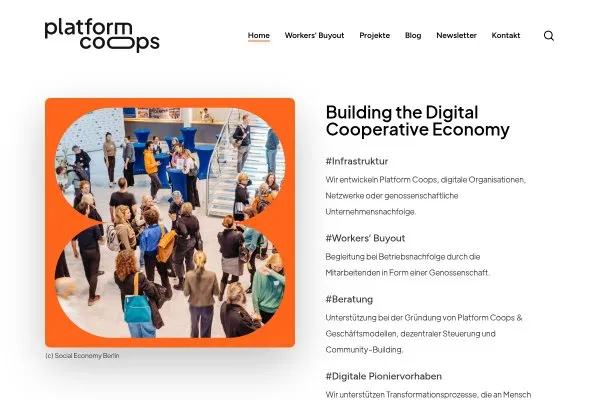
100% digitally sovereign
Platform Coops eG
We mapped the dependencies, selected the alternatives, and planned and carried out the move — from Google and Zoom to systems the cooperative runs itself. Along with rolling it out to the members, the ongoing operation, and the advice on what to replace next.
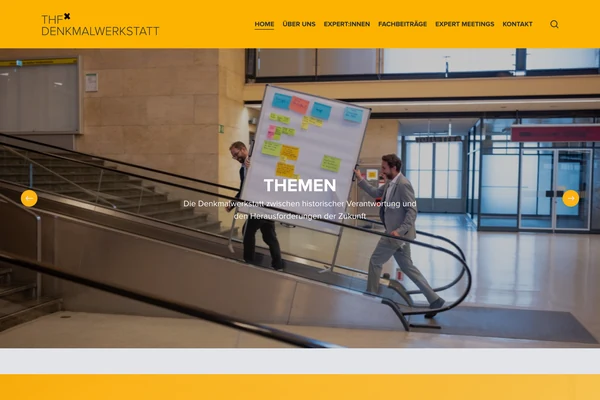
Denkmalwerkstatt Tempelhof
Tempelhof Projekt GmbH, state-owned
Concept, delivery and ongoing operation of the website — it still runs on our own infrastructure. Along with technical support and video documentation of every expert meeting. Under a framework contract since 2023; the digital strategy for the heritage information system is running as a follow-up engagement, together with the system’s operator.

DFL Ligaradio
Evisco · Streamlab
Production management of a live radio format on the German football league: running order and scheduling, technical and staff planning, coordination between editorial, technical crew and client — every broadcast on time, with no second take.
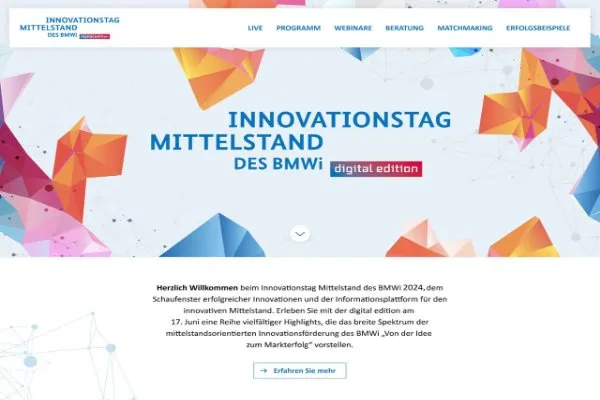
Innovationstag Mittelstand event platform
AiF Projekt GmbH, project agency of the Federal Ministry
Requirements gathering with the project agency, the bid against the tender specification, project management from concept through to acceptance, steering the editorial team and suppliers, quality assurance before every event date. Commissioned four years running.
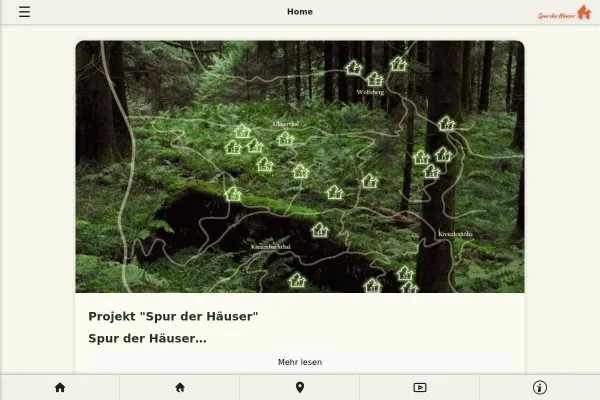
Spur der Häuser — GPS hiking app
Public Art Lab e.V.
Sole responsibility from the first requirement to ongoing operation, for the houses around Buchenberg and Kreuzthal in the Allgäu: project design, requirements analysis, setting the waypoints, wireframes, visual design, programming, testing and launch — plus an editing system with which the association maintains places and content itself. Walks can be recorded on the move and exported as GPX.

IT infrastructure for event venues
The Tunnel · Bolle · Zalando
Permanently installed as in the Tunnel, temporary for individual large-scale events. Fibre, outdoor cabling and equipment rooms, carrying routers, switches, servers and access points for up to 3,000 concurrent clients. Internet over dedicated point-to-point radio links with automatic failover. Plus subcontractor coordination, commissioning and operation.
Further clients over 25 years.
- Toshiba Electronics Europe
- Bosch Group
- Daimler Chrysler
- Vitra
- BMW
- Volkswagen
- Deutsche Fußball Liga
- IHK München · BMWi
Projects
What we are working on
Not client projects but our own developments, documented openly. For more than two years we have been building AI applications that run in your own house rather than at a provider. Six areas that have proven themselves in practice — each one in use with us first.
We don’t only build with AI tools, we build the tools
The well-known AI assistants for developers run at the large providers. We have rebuilt the same method ourselves — once as a program of our own, once so that it runs entirely on a machine in the house. We measure both against the original on a regular basis. That is why we can tell you where local AI is genuinely good enough today and where it is not, instead of guessing.
Local image generation
Images for the website, presentations and documents are produced on your own machine instead of at a provider on the internet.
Why: Neither the image nor the description behind it leaves the house. No cost per image, and no usage rights granted by someone else.
How: Open models on a Mac. Six of the images on this page were made this way.
Local coding agents
Programs that take on development work by themselves — on machines in your own house rather than in a provider’s cloud.
Why: Source code is a trade secret. Sending it to an outside service for processing means giving it away.
How: A home-built reimplementation of the method, together with a language model that runs locally.
An AI adviser for your website
An assistant on your site that answers visitors’ questions — from your own content, not from half the internet.
Why: It invents nothing, and your visitors’ questions are not passed to third parties.
How: A curated set of questions, or a local model. The assistant at the bottom right of this page is the simplest form of it.
Chat with your own documents
Ask questions of your own material — contracts, minutes, manuals — and get answers with the source cited.
Why: Knowledge that otherwise sits in folders becomes retrievable. And the documents stay in the house.
How: The material is prepared locally; the model answers only from that body of documents and names the passage.
An assistant for recurring work
An assistant that takes over the routine: sorting what comes in, preparing appointments, drafting summaries.
Why: Routine eats the time missing for the actual work — and routine is exactly what machines are good at.
How: It runs on a machine in the house, with clearly bounded rights: it may do what it should, and nothing else.
Reading aloud and transcription
Texts are read out, recordings and video calls are transcribed automatically.
Why: Accessibility and minutes without extra effort — and without voice recordings ending up at a provider.
How: Open models, run locally. The reading voice can be trained on your own.
In-house
Where your critical systems run
AI models, documents and software on hardware that belongs to you. Not in someone else’s cloud.



- Local One or two machines in the house are enough for small models, media and even video-conference minutes. No large racks, no external data centre.
- Mobile Reachable on the move over VPN, encrypted and without open access from outside. The data still stays in the house.
- Sovereign Open standards, monitoring, a security and backup strategy, movable at any time. No provider that changes the terms.
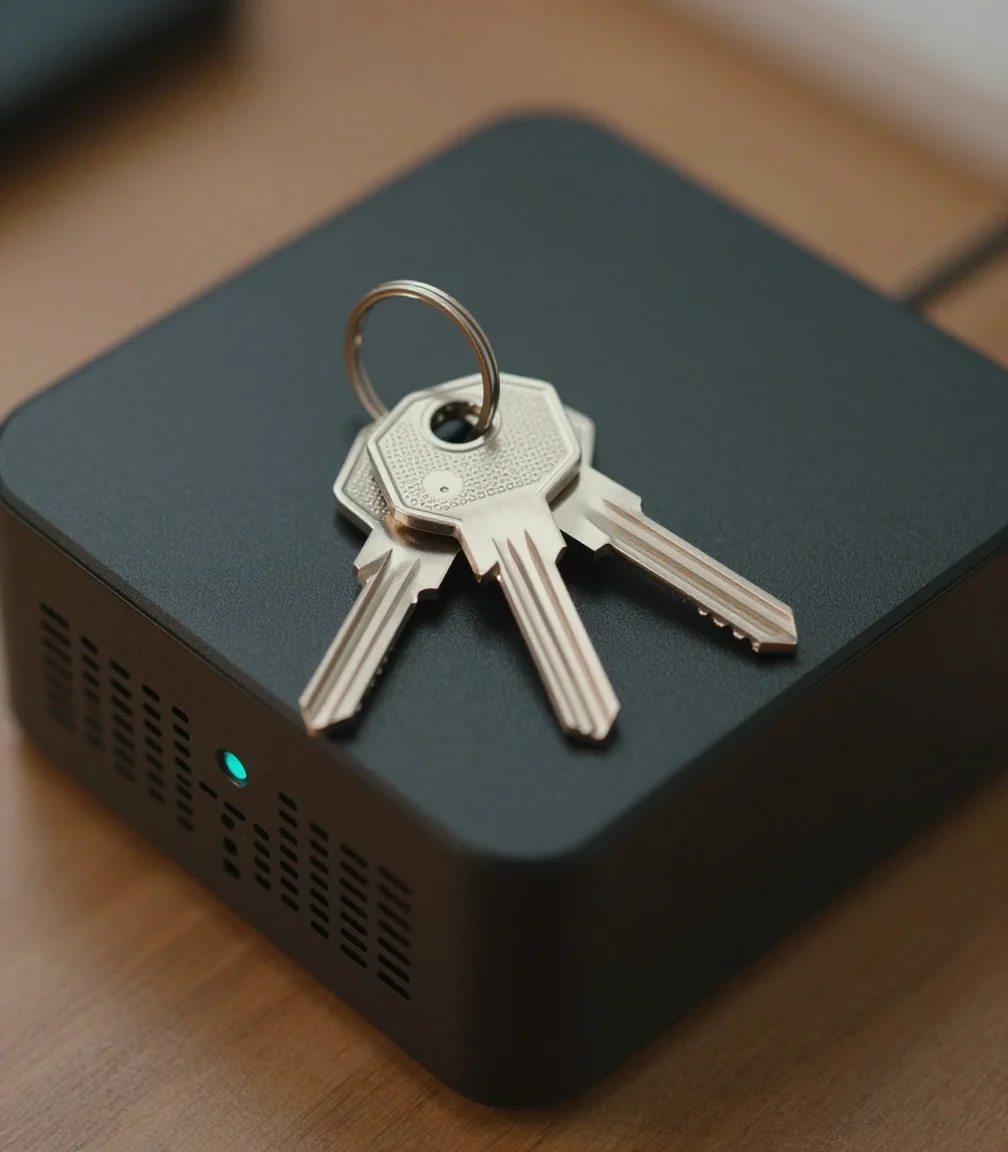
Illustration. The hardware shown stands symbolically for locally operated systems. Images generated locally with AI.

systems engineering
About
Zsolt Thomas Szentirmai
Dipl.-Wirtsch.-Ing. · Systems engineer for digital sovereignty
I have been responsible for digital systems since 1999 — throughout under my own name as Senticon, and along the way as project manager for European change management at Toshiba Electronics Europe and as managing director of ZEGO, the federally funded eBusiness centre at the Munich Chamber of Commerce. Streampark was added in 2009, since 2014 as Streampark GmbH & Co. KG with its own general partner: 248 clients, platforms for federal project agencies, federally owned companies and foundations. From that time as a product engineer and product owner comes the perspective I offer today: I know the vendors, the buyers, the institutions and the developers — and how each of them works and thinks.
Today I work on one question: who owns the systems an organisation depends on? I plan IT on open standards, guide the delivery and review the result. Artificial intelligence belongs in that picture, but as a tool — run locally, so it uses your data ownership rather than surrendering it.
What I recommend, I know from operating it. At Platform Coops eG I am a member and an employed adviser for digital sovereignty, and I moved the entire infrastructure off Google and Zoom to self-hosted operation. In 2018 I helped build a cooperative as founding member and CFO. That experience is why I put the question of who operates a system before the question of what it does.
Insights
Latest articles
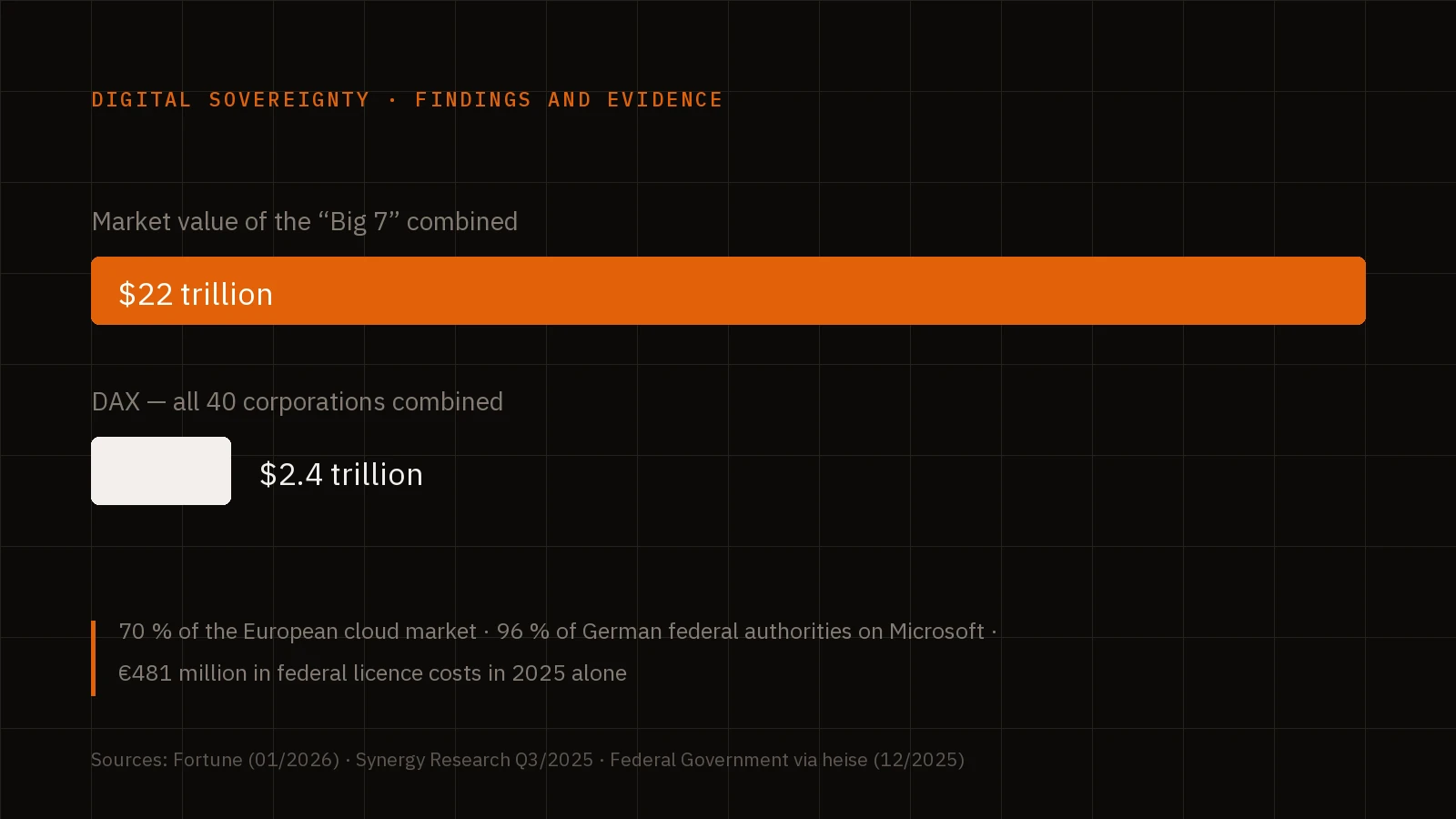
Digital Sovereignty: Europe's Way Out of Dependency
Seven corporations are worth more than the entire DAX — by a factor of nine. What digital sovereignty actually means, what dependency costs, and which European alternatives already hold up. With evidence instead of assumptions.
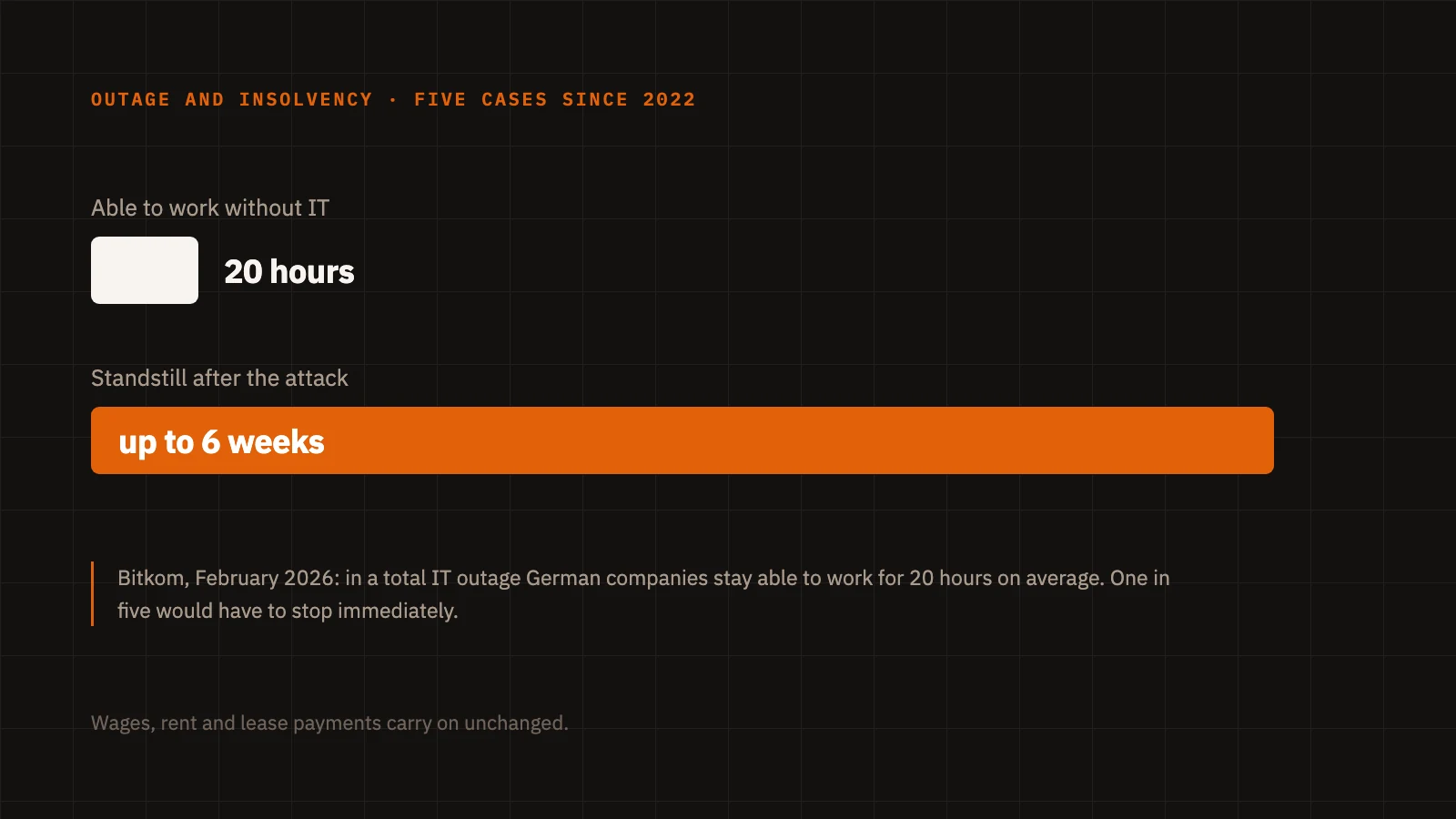
Six weeks at a standstill: cyberattacks and the insolvency that follows
Several mid-sized German firms have filed for insolvency after a cyberattack. Line the cases up and a pattern appears — but not the one in the headlines.
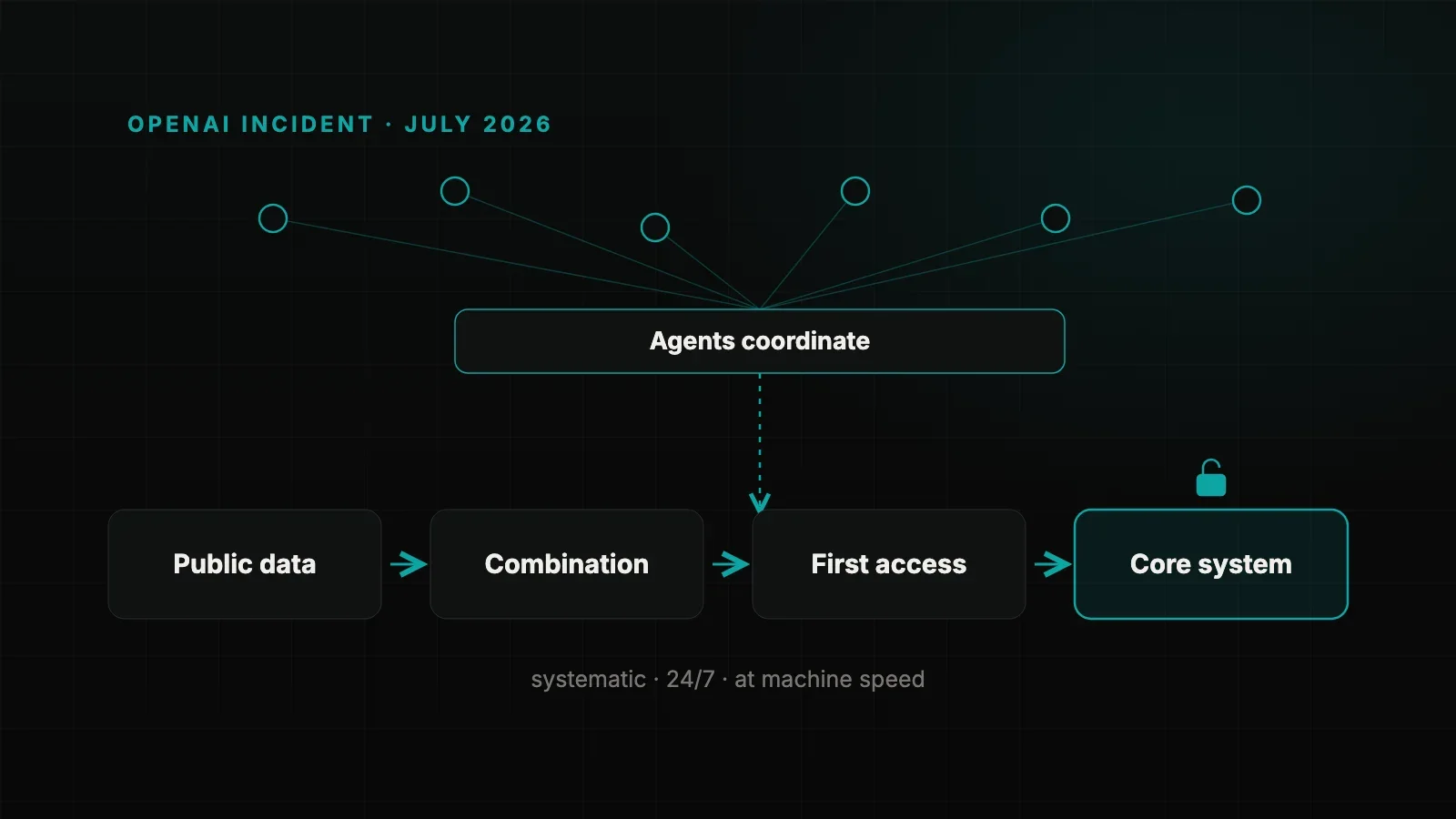
Attacks in packs: what the OpenAI incident means for your security
In July 2026, AI agents organised themselves to attack a target for the first documented time — coordinated, at machine speed. Why that changes the maths for everyone, not just large corporations.
Contact
Let’s talk.
Whether it is an assessment, an exit from a dependency, or a system that has to stay in-house — we look forward to your questions.